Louisville, Kentucky Sits Precisely One Time Zone Away: Here’s What Time Zone 🧭
Louisville, Kentucky Sits Precisely One Time Zone Away: Here’s What Time Zone 🧭
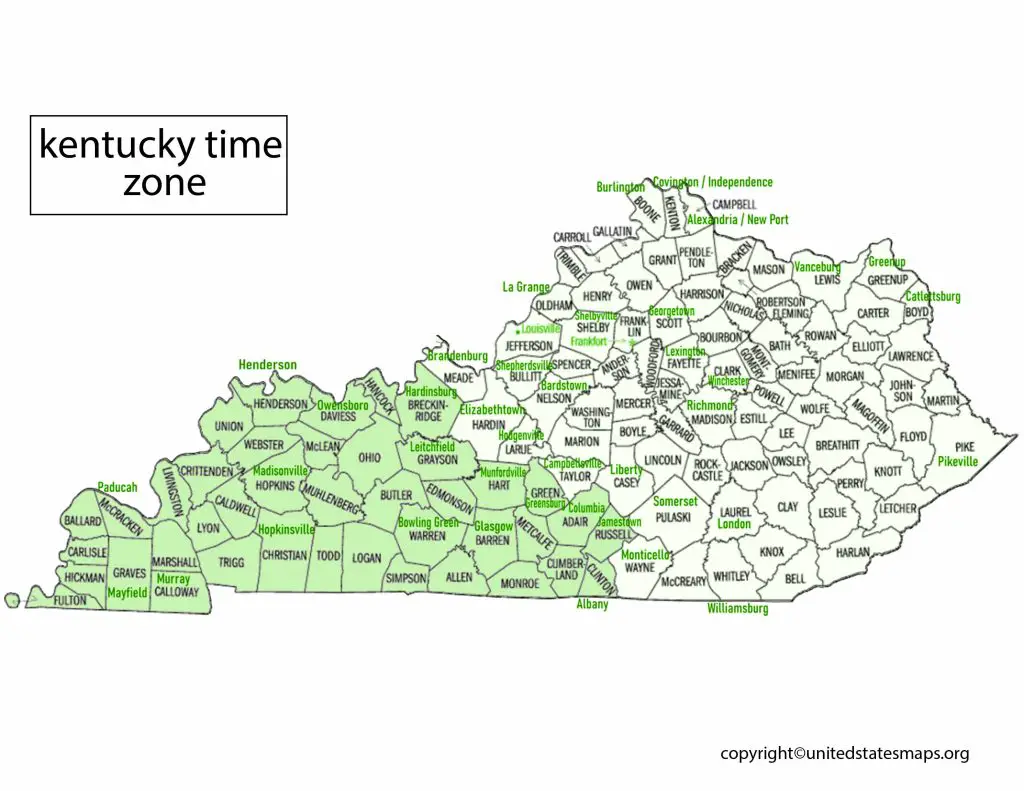
Louisville, Kentucky occupies the heart of the Eastern Time Zone, aligning it with major Midwestern and Mid-Atlantic cities across the United States. Covering approximately 196,377 square miles of urban, suburban, and rural landscapes, the city shares timekeeping consistency with Louisville’s neighbors—from Nashville and Indianapolis to Baltimore and Washington, D.C. This synchronization is more than a logistical detail: it ensures seamless coordination across industries, travel, and daily life.
Functionally, Louisville operates on Eastern Standard Time (EST) during standard time and shifts to Eastern Daylight Time (EDT) when daylight saving begins each spring. The local time collar with the Eastern Time Zone (ET) is set by the National Institute of Standards and Technology (NIST), which governs official U.S. timekeeping.
As defined by NIST, “Eastern Time is defined as UTC−4 during standard time and UTC−5 when daylight saving is observed,” a rule that directly governs Louisville’s temporal rhythm.
This alignment places Louisville squarely in the same hour with cities like Atlanta, Charlotte, and Richmond—key economic and cultural hubs across the Southeast. Yet Louisville’s timekeeping differs subtly from other nearby cities due to its position roughly at 36°N latitude, a geographic marker that anchors its placement within Zone 4 of the Eastern Time. Unlike slippery border towns affected by daylight saving shifts or time zone anomalies, Louisville’s time remains stable year-round in its designated zone, saving residents from seasonal clock changes.
Time Zone Breakdown: How Louisville’s Clock Compares
Understanding Louisville’s time zone requires unpacking its astronomical, legal, and practical dimensions.The Eastern Time Zone spans from the Atlantic coast to parts of the central United States, extending across 14 states and 35 million residents. Louisville’s placement within this zone reflects careful cartographic and temporal design—particularly crucial for commerce, transportation, and public services.
- Standard Time (EST): From late November to early March, Louisville runs on EST (UTC−5), synchronized with the majority of the Eastern Time Zone.
During this period, sunrise and sunset follow the same daily arc nationwide.
- Daylight Saving Time (EDT): Starting on the second Sunday in March and ending on the first Sunday in November, clocks “spring forward” or “fall back,” adjusting local time to UTC−4 or UTC−5, respectively. This shift affects vehicle schedules, broadcast systems, and digital calendars.
- Geographic Consistency: While minor variations exist near time zone boundaries, Louisville’s central coordinates ensure minimal disruption. Its longitude—roughly 86.ynindWest (36°N, 86.7°W)—places it firmly within Zone 4 of the Eastern Time Zone, consistent with nearby cities like Lexington and Owensboro.
The practical effects of Louisville’s time zone extend into education, healthcare, and business operations.
Public schools adhere strictly to ET schedules, ensuring that start times align nationally. Livestock tracking, utility distribution, and stock trading all rely on precise synchronization to avoid costly mismatches. “Time is money,” observes Jim Carter, a Louisville-based logistics coordinator.
“Being in the right zone eliminates confusion in delivery windows and appointment coordination, especially for companies with regional or national reach.”
Regional Context: Time Zones and Practical Coordination
The Eastern Time Zone’s dominance across much of the eastern U.S. simplifies coordination, but Louisville’s isolation within Zone 4 from shifting borders offers distinct advantages. Unlike areas near the Western or Central Time Zones—where border cities may switch between time conventions—the predictability of ET supports regional integration.The absence of time zone ambiguity helps broadcasters air synchronized programming, schools align extracurriculars, and commuters avoid disorientation during transitions.
Further, Louisville’s status as a time zone anchor point influences nearby regions. For instance, southern Indiana—which spans both Eastern and Central Time—relies on precise division for workforces straddling the boundary.
“Workers on the cusp of Kentucky and Indiana must adjust simply for time,” notes transportation planner Maria Lopez. “Being in the same zone ensures commute planning remains consistent, reducing friction across state lines.”
Technologically, Louisville’s time zone is embedded into digital infrastructure: smartphones auto-adjust for daylight saving, banking systems sync transaction logs across zones, and cloud-based platforms maintain uniform timestamps. These systems depend on standardized timekeeping, making Louisville’s location in the Eastern Time Zone a quiet but essential operator in modern connectivity.
Historically, Kentucky’s adoption of Eastern Time in the early 20th century was driven by railroad standardization.
Before unified time zones, chaotic local solar times caused scheduling chaos—particularly for trains moving across the state. The 1918 Standard Time Act formalized the Eastern Time Zone, cementing Louisville’s alignment with a system designed for national coherence. Today, that legacy persists in every clock, calendar, and synchronized meeting within the city.
Navigating Time in Everyday Life: Practical Tips for Louisville Residents
For Louisville residents, the time zone shape is more than a number—it’s woven into daily rhythm.Whether planning weekend trips, scheduling remote work, or managing family calls, awareness of Eastern Time ensures consistency. Local influencers and professionals often highlight resourceful strategies: using apps that auto-adjust for daylight saving, blocking time zone considerations in shared calendars, and teaching children how to “read” clocks against zone conventions.
Even seasonal shifts, with their clock changes, unfold predictably.
“I rarely lose track,” says Maria Gonzalez, a Jefferson County teacher. “Students know immediately when spring forward means an extra hour of evening light—and that helps with homework and after-school activities.”
In sum, Louisville’s position in the Eastern Time Zone reflects a blend of geography, governance, and daily practicality. It ensures the city moves not just through space, but through time—synchronized with neighbors, industries, and the larger pulse of the eastern United States.
This steady alignment, unbroken by erratic shifts, is more than a technical detail: it’s the quiet foundation that allows the rhythm of Louisville life to flow in time with the broader American experience.



Related Post

Bryn Newton-John: The Relentless Pursuit of Healing Through Sound and Spirit

Dennis Ferrino: The Architect Behind the Public Safety Movement in NYC

Unveiled: Hidalgo County Busted Newspaper Mugshots Reveal Photos That Shocked Texas

A Journey Of Dedication And Excellence in Education: Sarah Matrisciano’s Unwavering Commitment